
Phygital Marketing Through QR Codes
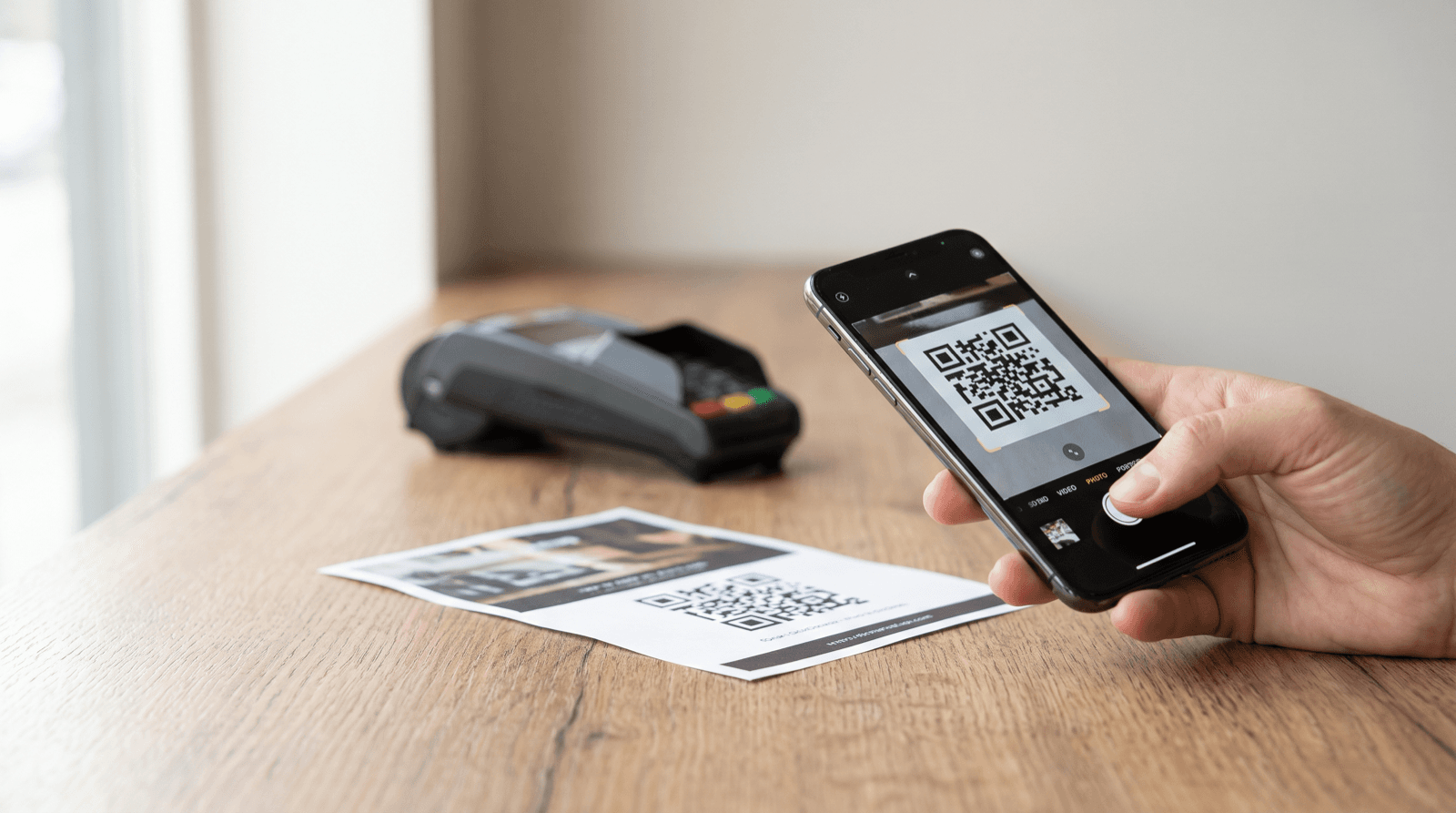
A consumer flips through a magazine, spots an ad, and holds up their phone. Two seconds later, they're watching a product video. Three seconds after that, they're adding it to their cart. No typing. No searching. No friction. That seamless jump from paper to purchase is phygital marketing in action. In 2026, it's happening hundreds of millions of times a day.
The convergence of physical and digital marketing isn't new as a concept, but it has finally matured into something concrete and measurable. Consumers now move fluidly between a product label and an instructional video, between a storefront window and an online shopping cart. QR codes are the connective tissue making it all work.
For decades, the biggest weakness of offline marketing was its immeasurability. A billboard could generate brand awareness, but proving it drove a specific sale? Nearly impossible. A direct mail piece could land in thousands of mailboxes, but tracking engagement beyond a coupon redemption was a guessing game at best. QR codes have upended this equation entirely. They transform every printed surface (packaging, posters, magazine spreads) into a trackable, data-rich digital touchpoint.
This article digs into the state of phygital marketing in 2026: how QR codes evolved from a pandemic-era convenience into permanent marketing infrastructure, what data they unlock for offline campaign measurement, and the risks marketers need to stay ahead of as adoption scales.
The QR Code Market in 2026: Scale and Momentum
The QR code market ranks among the fastest-growing segments in marketing technology in 2026. According to Mordor Intelligence, the global QR code market is projected to expand from $15.23 billion in 2026 to $33.14 billion by 2031, representing a 16.82% compound annual growth rate (CAGR). A separate forecast valued the market at $13.04 billion in 2025 and projects it will reach $33.14 billion by 2030, growing at a CAGR of 20.5%.
Consumer adoption is keeping pace with that investment. An estimated 102.6 million US consumers are projected to scan QR codes with their smartphones in 2026, according to data cited by Wave Connect. That follows an already substantial base of 99.5 million US smartphone users who scanned QR codes in 2025.
On the marketer side, adoption is nearly universal. By 2025, over 90% of marketers reported using QR codes, with 94% stating they had increased their usage in the prior 12 months. The most common channels for QR code placement include email (47%), product packaging (46%), events (43%), and print ads (40%), according to QR code industry statistics compiled across multiple sources.
The picture these numbers paint is unambiguous: QR codes aren't a niche tool. They're a mainstream marketing channel with billions of dollars in market value and over a hundred million active users in the United States alone.
From Pandemic Novelty to Permanent Infrastructure
Remember when QR codes were mostly for pulling up a restaurant menu without touching a laminated card? That era feels distant now. The technology saw a massive resurgence during the pandemic, when restaurants, retailers, and healthcare providers adopted QR codes for contactless menus, payments, and check-ins. What could have been a temporary spike instead became a lasting transformation in how brands connect physical and digital experiences.
Read also: 7 QR Code Lead Generation Strategies for 2026
In 2026, QR codes are a permanent, strategic marketing channel, not a leftover from the contactless era of the early 2020s. Experts at QRCodeKIT note that the conversation has shifted dramatically. The question is no longer whether QR codes work, but how they are "designed, governed, secured, and measured." According to QRCodeKIT, QR codes are now seen as a "mature, measurable channel that sits comfortably alongside email, paid media, and social platforms."
This maturity shows up in a strategic shift from one-off campaigns to permanent, scalable QR code ecosystems managed across their entire lifecycle. Rather than printing a QR code for a single promotion and discarding it, brands now treat QR codes as long-lived digital assets, updating their destinations, refreshing their linked content, and continuously analyzing their performance data.
The Rise of Dynamic QR Codes
Dynamic QR codes are the engine behind this strategic evolution. Static QR codes encode a fixed URL directly into the code pattern. Dynamic QR codes work differently: they redirect through a short URL that can be updated at any time after printing. A QR code on a cereal box printed in January can link to a winter recipe page, then get redirected to a summer grilling guide in June. No reprinting required.
As of 2024, dynamic QR codes held 65% of the QR code market share and are projected to expand at a 19.2% CAGR through 2030. Two critical advantages drive their dominance: the ability to update destinations in real-time and the capacity to capture detailed analytics on every scan. For marketers managing campaigns across print, packaging, and out-of-home media, dynamic QR codes eliminate the risk of broken links and outdated content while providing the measurement data that justifies continued investment.
How QR Codes Make Offline Campaigns Measurable
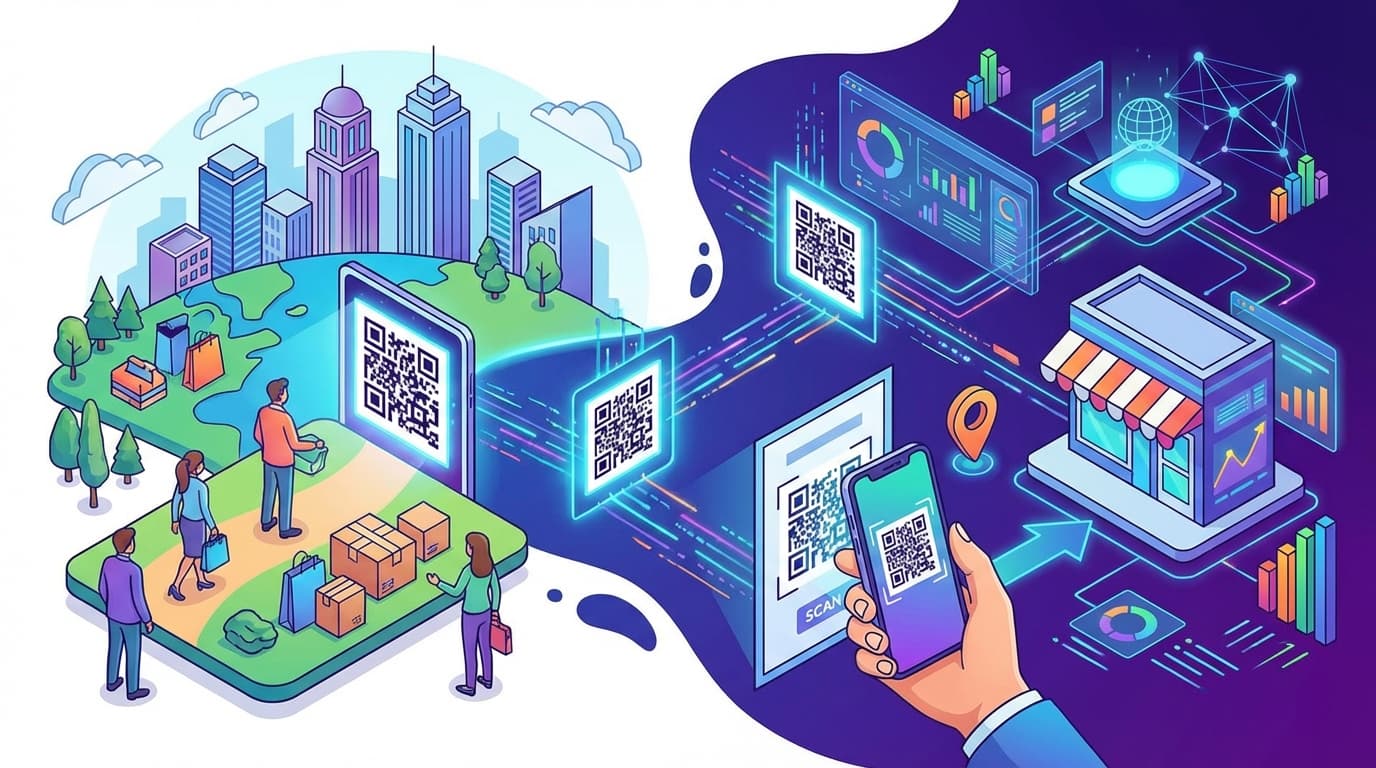
QR codes solve the oldest problem in offline marketing: attribution. By creating a direct, trackable link from a physical asset to a digital destination, they turn static materials into measurable touchpoints that generate the same quality of data marketers expect from digital channels.
When a consumer scans a QR code, the platform behind it can capture a rich set of data points:
- Scan Rate: The percentage of people who scan the code after seeing it, indicating how effective the placement is and how compelling the call-to-action proves to be.
- Geographic Data: Location information pinpoints where scans occur, enabling analysis of campaign performance by city, region, or even specific venue.
- Time-of-Day Analytics: Timestamped scan data reveals when an audience is most likely to engage, helping marketers optimize the timing of future campaigns.
- Device Type: Knowing whether the audience uses iOS or Android devices informs decisions about app development, landing page optimization, and technology targeting.
- Conversion Rate: By assigning unique URLs to each QR code placement, marketers can track post-scan actions (sign-ups, downloads, purchases) and directly attribute revenue to a specific print material, billboard, or package.
This data lets marketing teams calculate placement-level Return on Ad Spend (ROAS) and Customer Acquisition Costs (CAC) for offline channels. A direct mail campaign is no longer a black box. A magazine ad is no longer an act of faith. Every printed piece becomes a performance marketing asset with concrete, defensible metrics: the kind that can justify budget allocations to the C-suite.
Closing the Attribution Gap
The attribution gap between online and offline marketing has historically been one of the industry's most stubborn challenges. Digital channels like paid search and social media advertising have always offered granular tracking: clicks, impressions, conversions, cost per acquisition. Print, direct mail, and out-of-home (OOH) advertising lacked this precision, making it difficult to compare their performance against digital alternatives on equal terms.
QR codes close this gap by providing a digital handshake at the moment of physical engagement. When a consumer scans a code on a bus shelter ad, that interaction gets logged with the same fidelity as a click on a Google ad. This parity is transformative for media planning and budget allocation. It gives offline channels the evidentiary foundation they need to compete for marketing dollars in a data-driven organization.
Real-World Phygital Use Cases in 2026
The versatility of QR codes enables a wide range of phygital applications that enhance the customer journey across industries. In 2026, these use cases have moved well beyond simple URL redirects into rich, contextual experiences.
Read also: Claude Code for Beginners: Setup, Tips & First Project
Interactive Product Packaging
Brands place QR codes on products to provide how-to videos, ingredient sourcing information, or direct links to re-order. The product itself becomes a media channel, extending the brand interaction well beyond the point of purchase. A consumer scanning a code on a skincare bottle might access a personalized routine builder. A code on a food package might reveal the farm where the ingredients were sourced.
Retail and Window Shopping
Canadian lifestyle brand Rose City Goods uses QR codes in its window displays, allowing potential customers to browse and purchase items by scanning the code even when the store is closed. A static storefront becomes a 24/7 sales channel, capturing purchase intent that would otherwise evaporate after business hours.
Print Advertising
A QR code in a magazine ad can lead a reader to an exclusive video, a special discount, or a pre-populated shopping cart. What used to be a multi-step journey (see ad, remember brand, search online later) now collapses into a single, trackable interaction. Interest converts to action in seconds.
Events and Signage
At trade shows and in-store environments, QR codes on signage provide detailed product specifications, link to event registration forms, or enter users into contests. These codes capture engagement data that helps event organizers and retailers understand which displays, booths, or products generate the most interest.
App Downloads and Loyalty Programs
Starbucks has utilized QR code campaigns to drive downloads of its mobile app, reportedly boosting loyalty program sign-ups. This use case shows how QR codes can serve as a frictionless bridge between a physical store visit and long-term digital engagement through an app ecosystem.
What Consumers and Experts Expect in 2026
Consumer expectations for QR code experiences have risen sharply. People no longer scan codes just to land on a generic homepage. According to industry experts, they now expect "relevance, speed, and value": interactive demos, personalized content, or utility-driven tools like setup guides.
This elevated expectation reflects a broader shift in how consumers perceive the relationship between physical and digital brand interactions. As NeoReach states, "Consumers no longer distinguish between online influence and offline action. They expect both to work together seamlessly." The same NeoReach analysis argues that in an era of AI-generated content, "physical presence has become a powerful validator of credibility," with QR codes serving as the bridge to trusted digital information at the moment of decision.
For marketers, this means the QR code itself is only half the equation. The post-scan experience (the landing page, the content, the load speed, the mobile optimization) matters just as much. A beautifully designed QR code campaign that leads to a slow, non-responsive webpage will damage brand perception rather than enhance it.
Risks and Limitations Marketers Must Navigate
Despite their widespread adoption and clear utility, QR codes in phygital marketing carry several risks that demand proactive management in 2026.
Security Threats: The Rise of "Quishing"
The most significant risk is QR code-based phishing, commonly known as "quishing." Malicious actors create QR codes that lead to fake websites designed to steal credentials or install malware. They can also place stickers of malicious codes over legitimate ones on public displays. This tactic is difficult for consumers to detect. This threat erodes consumer trust in QR codes broadly and demands new security measures, including scan preview tools and detection technologies that verify a code's destination before the user gets redirected.
Poor User Experience
A poorly implemented QR code strategy can frustrate users and damage brand perception. Common pitfalls include linking to non-mobile-friendly websites, slow-loading pages, or broken links. Dynamic QR codes mitigate the broken link risk by allowing destination updates, but the content at the destination still needs to be carefully curated for a seamless mobile experience. Every scan is a moment of truth. If the experience disappoints, the consumer is unlikely to scan again.
The Digital Divide
While smartphone penetration is high, not all demographics are equally comfortable or capable of using QR codes. Campaigns that rely exclusively on QR codes risk alienating segments of the population that are less tech-savvy or lack access to modern smartphones and reliable internet connectivity. Inclusive marketing strategies should offer alternative pathways (short URLs or phone numbers, for instance) alongside QR codes.
Data Privacy Concerns
The tracking capabilities that make QR codes valuable to marketers can raise privacy concerns among consumers. Transparency is essential. Brands should be clear about what data they collect and how they use it, especially when the QR code requests access to location or other personal information. In a regulatory environment that continues to tighten around data privacy, responsible data practices aren't just ethical. They're a business imperative.
Building a Phygital Strategy with QR Code Analytics
For marketing teams looking to build or scale their phygital strategy in 2026, QR code analytics platforms provide the foundation for turning offline campaigns into data-driven operations. Here are the key principles for getting it right:
- Use dynamic QR codes for all campaigns. The ability to update destinations and capture analytics makes dynamic codes the only viable option for serious marketing operations. With dynamic codes holding 65% of the market as of 2024, this is already the industry standard.
- Assign unique codes to each placement. To achieve placement-level attribution, every distinct print run, billboard location, or packaging variant should have its own QR code. This granularity is what makes meaningful ROAS calculations possible.
- Optimize the post-scan experience. Mobile-first landing pages, fast load times, and contextually relevant content are non-negotiable. The scan is the beginning of the experience, not the end.
- Treat QR codes as long-term assets. Rather than creating and discarding codes for each campaign, manage them as part of a permanent digital infrastructure. Update destinations seasonally, refresh content regularly, and monitor performance continuously.
- Address security proactively. Implement scan preview features, educate consumers about safe scanning practices, and monitor for unauthorized code tampering on public-facing materials.
The Future of Phygital Marketing Is Already Here
Phygital marketing in 2026 is not a future trend. It's the present reality. The QR code market is projected to more than double in the next five years. Over 100 million US consumers actively scan codes. More than 90% of marketers already integrate QR codes into their strategies. The infrastructure for bridging print and digital is firmly in place.
The competitive advantage now lies not in whether a brand uses QR codes, but in how well it uses them: how thoughtfully the codes are designed, how rigorously the data is analyzed, how seamlessly the post-scan experience delivers value, and how responsibly the collected data is managed.
For marketers who have long struggled to prove the ROI of their offline campaigns, QR code analytics offer something that was previously unattainable: concrete, defensible evidence that a printed piece of paper drove a measurable business outcome. In 2026, that capability isn't a luxury. It's the baseline expectation for any serious marketing operation.

Ready to track your QR codes?
Create trackable QR codes with powerful analytics. See who scans, when, and where. All in real-time. Get started for free today.