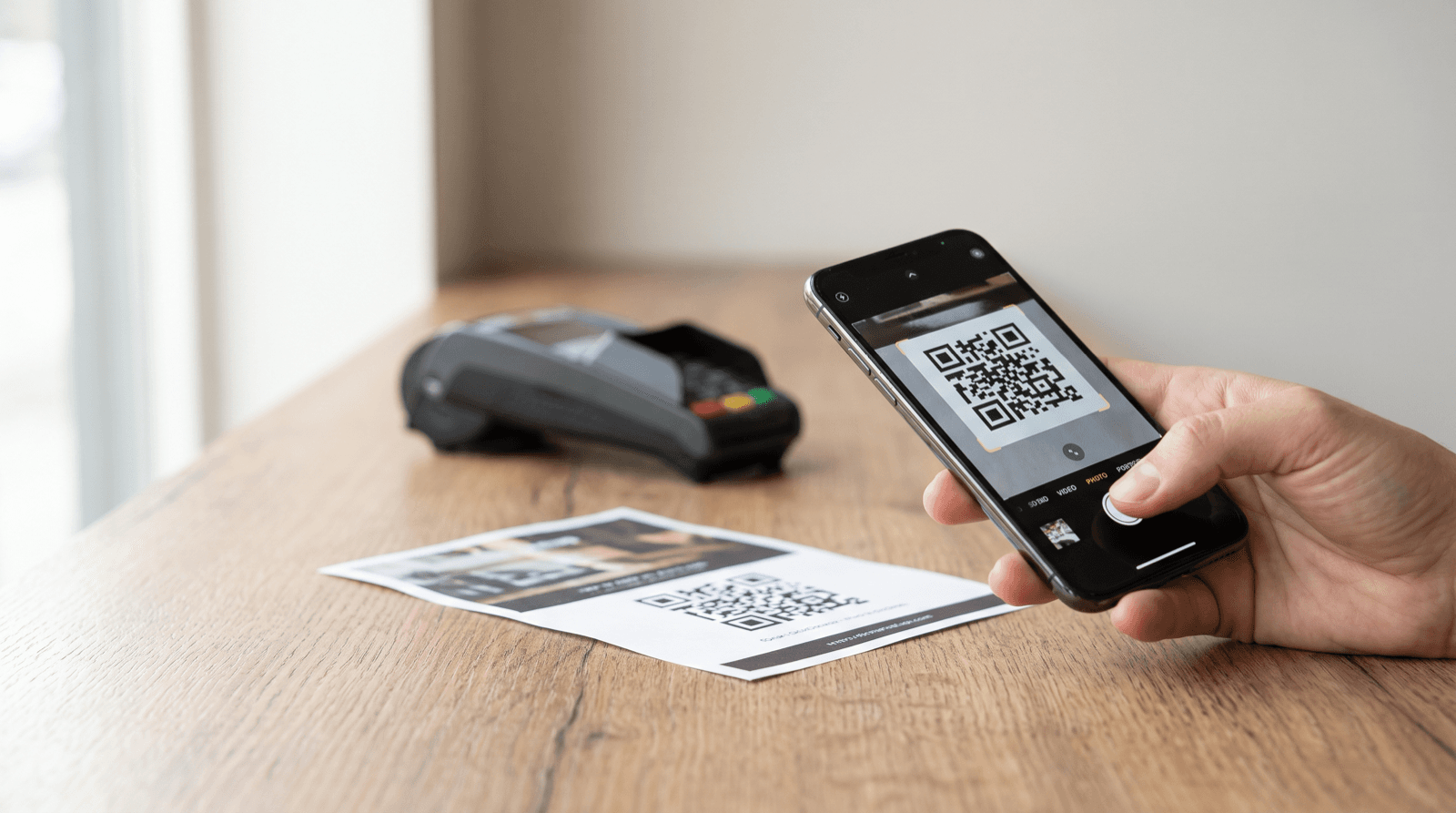


QR Codes vs. NFC vs. Barcodes: 2026 Leaders
The battle for contactless supremacy has intensified as businesses worldwide grapple with choosing the optimal scanning technology for their operations. QR codes experienced explosive growth during the pandemic, NFC payments have surged in retail environments, and traditional barcodes continue their decades-long reign in inventory management. As we approach 2026, understanding which technology will dominate specific use cases becomes crucial for businesses planning their digital infrastructure investments.
Current Market Landscape and Adoption Rates
The global contactless payment technology market reveals fascinating adoption patterns across different regions and industries. QR codes currently process over 5.3 billion transactions annually, with China leading at 83% mobile payment adoption through QR-based systems. NFC payments account for approximately 40% of all contactless transactions in developed markets, particularly in North America and Europe.
Traditional barcodes maintain their stronghold in supply chain operations, with over 6 billion scans occurring daily across retail, logistics, and manufacturing sectors. The Universal Product Code (UPC) alone handles 95% of point-of-sale transactions globally, demonstrating the enduring power of 1D barcode technology.
Regional preferences significantly impact adoption trajectories. Asian markets favor QR codes due to their integration with super-apps like WeChat Pay and Alipay. European consumers increasingly embrace NFC-enabled contactless cards and mobile wallets. North American markets show hybrid adoption, with retailers implementing both technologies to accommodate diverse consumer preferences.
QR Code Technology: Strengths and Market Position
QR codes remain essential despite NFC growth, primarily because they cost nothing to implement and work with any smartphone. Unlike NFC, which requires specialized hardware, QR codes function with any smartphone camera, eliminating barriers to entry for small businesses and emerging markets.
Dynamic QR codes represent a significant evolution, enabling real-time content updates without reprinting physical codes. Restaurants update menus instantly, event organizers modify schedules on-the-fly, and retailers adjust promotional campaigns based on inventory levels. This flexibility makes QR codes the preferred choice for applications requiring frequent content changes.
The integration of QR codes with augmented reality creates immersive experiences that NFC and traditional barcodes cannot match. Museums use AR-enabled QR codes to overlay historical information on exhibits. Furniture retailers allow customers to visualize products in their homes before purchase. Similarly, QR codes for geocaching and treasure hunts demonstrate how the technology creates engaging location-based experiences without requiring specialized apps.
QR code analytics provide detailed tracking capabilities that surpass traditional barcode limitations. Businesses monitor scan locations, user demographics, and engagement patterns to optimize marketing campaigns. Platforms like QRlytics offer comprehensive analytics dashboards that help businesses understand user behavior and measure campaign effectiveness across multiple touchpoints.
NFC Technology: Advantages and Limitations
NFC dominates in speed and security for high-volume retail payments, though QR codes lead in markets with lower smartphone penetration and logistics applications. The technology's sub-second transaction times make it ideal for high-traffic environments like subway systems, coffee shops, and grocery stores where speed directly impacts customer satisfaction.
Security advantages position NFC as the gold standard for financial transactions. Tokenization technology replaces sensitive payment data with unique identifiers, significantly reducing fraud risks. The close proximity requirement (typically under 4 centimeters) provides additional security against eavesdropping attacks.
Infrastructure costs remain prohibitive for many businesses, particularly in developing markets where QR code solutions require only printed materials or digital displays. NFC's limited range restricts use cases to direct contact scenarios, unlike QR codes that function at various distances.
Device compatibility issues persist, though they're diminishing. Most modern smartphones include NFC capabilities, but older devices and budget models in emerging markets often lack this functionality. This digital divide ensures QR codes maintain relevance in markets with diverse device ecosystems.
Traditional Barcode Systems: Enduring Relevance
Traditional 1D barcodes still rule inventory management, while 2D codes (QR, Data Matrix) excel in data-rich applications. The simplicity and reliability of UPC and Code 128 barcodes make them irreplaceable for basic product identification and inventory tracking.
Manufacturing environments particularly benefit from traditional barcode durability. Industrial scanners read damaged or partially obscured 1D barcodes more reliably than cameras attempting to decode QR codes in harsh conditions. This robustness ensures continued adoption in warehouses, factories, and distribution centers.
Cost considerations favor traditional barcodes for high-volume applications. Printing millions of UPC labels costs significantly less than generating equivalent QR codes or implementing NFC tags. For products with static information requirements, traditional barcodes offer unmatched cost efficiency.
Data limitations constrain traditional barcode applications. Standard UPC codes store only 12 digits, insufficient for complex product information or serialization requirements. This limitation drives adoption of 2D barcodes in industries requiring detailed tracking, such as pharmaceuticals and aerospace.
Security Considerations Across Technologies
Security concerns differ significantly across scanning technologies, influencing adoption decisions for sensitive applications. NFC offers tokenization protection through established payment networks, creating multiple security layers that protect consumer financial data.
QR code phishing represents a growing threat as malicious actors create fake codes directing users to fraudulent websites. Encryption innovations and secure QR code generation platforms are addressing these vulnerabilities. Enterprise-grade QR code solutions now include authentication mechanisms and real-time threat detection.
Traditional barcodes face minimal security risks due to their limited functionality, but this simplicity also prevents implementation of advanced security features. Industries handling sensitive products increasingly migrate to 2D barcodes with encryption capabilities for enhanced protection.
Authentication protocols vary significantly across technologies. NFC leverages established EMV standards for payment security, while QR codes rely on HTTPS encryption and digital signatures. Traditional barcodes depend primarily on physical security measures rather than digital protection.
Performance Analysis: Speed, Reliability, and User Experience
Transaction speed varies dramatically across technologies, directly impacting user experience and business efficiency. NFC payments complete in under one second, making them ideal for high-throughput environments. QR code scanning typically requires 2-3 seconds, acceptable for most applications but potentially problematic in time-sensitive scenarios.
Reliability metrics favor traditional barcodes in controlled environments, where dedicated scanners achieve 99.9% read rates. QR codes using smartphone cameras show more variable performance, influenced by lighting conditions, camera quality, and user technique. NFC demonstrates excellent reliability within range but fails completely beyond proximity limits.
User experience considerations increasingly influence technology selection. Younger consumers prefer QR codes for their smartphone integration and social sharing capabilities. Older demographics often favor NFC's tap-and-go simplicity. Traditional barcodes require no user interaction, making them ideal for backend operations.
Environmental factors significantly impact performance. QR codes struggle in low-light conditions or when displayed on curved surfaces, while NFC functions consistently regardless of lighting. Traditional barcodes excel in industrial environments but may degrade under extreme conditions without protective measures.
Industry-Specific Applications and Preferences
Retail environments showcase distinct technology preferences based on operational requirements. Grocery stores rely heavily on traditional UPC barcodes for checkout efficiency. Clothing retailers increasingly adopt QR codes for product information and styling suggestions. High-end retailers implement NFC for seamless payment experiences and customer engagement.
Healthcare applications demand different technology approaches. Pharmaceutical tracking requires 2D Data Matrix codes for serialization compliance, while patient identification often uses traditional barcodes for reliability. NFC finds applications in medical device authentication and secure patient data access.
Logistics and supply chain operations demonstrate technology stratification. Traditional barcodes handle basic package identification, QR codes manage detailed tracking information, and NFC tags monitor high-value shipments requiring real-time location updates.
Event management increasingly favors QR codes for their versatility and cost-effectiveness. Ticketing, contact tracing, and information sharing all benefit from QR code flexibility. Organizations creating interactive treasure hunts without special apps leverage QR codes' universal accessibility, while NFC serves premium events requiring fast entry processing.
Cost-Benefit Analysis for Businesses
Implementation costs vary significantly across technologies, influencing adoption decisions for budget-conscious businesses. QR codes require minimal upfront investment, often just printing costs or digital display capabilities. Traditional barcodes offer similar low-cost entry but may require scanner hardware for high-volume operations.
NFC implementation demands substantial infrastructure investment, including compatible payment terminals, staff training, and ongoing transaction fees. The technology's speed and security benefits often justify costs for businesses processing high transaction volumes.
Operational costs reveal different patterns. QR codes incur minimal ongoing expenses but may require frequent reprinting for damaged codes. NFC systems involve transaction fees and maintenance costs but eliminate physical replacement needs. Traditional barcodes offer the lowest operational costs for stable applications.
Return on investment calculations depend heavily on use case specifics. Restaurants report 30% faster table turnover using QR code menus, while retailers see 15% reduced checkout times with NFC payments. These efficiency gains often offset implementation costs within months.
Future Predictions and Technology Evolution
The future isn't QR versus NFC: it's strategic combination based on use case, with QR evolving through dynamic codes and AR integration. Successful businesses will implement hybrid approaches, using each technology's strengths for specific applications rather than choosing a single solution.
QR code evolution continues through enhanced error correction, improved visual design options, and deeper analytics integration. Dynamic QR codes will become standard, enabling real-time content updates and personalized user experiences. AR integration will create immersive interactions impossible with other technologies.
NFC technology advances focus on extended range capabilities and reduced power consumption. New protocols may enable meter-range communication while maintaining security benefits. Integration with Internet of Things (IoT) devices will expand NFC applications beyond payments into smart home and industrial automation.
Traditional barcode innovation emphasizes improved printing techniques and enhanced scanning algorithms. While the basic technology remains unchanged, implementation improvements continue reducing costs and increasing reliability for high-volume applications.
Strategic Recommendations for 2026
Businesses planning technology investments should adopt use case-driven approaches rather than technology-first strategies. Payment processing benefits from NFC's speed and security, while marketing campaigns leverage QR codes' flexibility and analytics capabilities. Inventory management continues relying on traditional barcodes for cost-effective reliability.
Multi-technology implementations provide optimal customer experiences. Retailers should offer both QR code and NFC payment options to accommodate diverse consumer preferences. Restaurants benefit from QR code menus with NFC payment integration for complete contactless experiences.
Security requirements must guide technology selection for sensitive applications. Financial services and healthcare organizations should prioritize NFC's established security protocols, while marketing and information sharing applications can leverage QR codes' accessibility and engagement features. Tools like QRlytics provide the security features and analytics needed for professional QR code deployments.
Geographic considerations remain crucial for global businesses. QR codes dominate in Asian markets and emerging economies, while NFC penetration continues growing in developed markets. Companies operating across multiple regions need flexible technology strategies accommodating local preferences.
Rather than declaring a single winner, 2026 will see continued coexistence of all three technologies, each serving distinct market needs. QR codes will maintain dominance in cost-sensitive and information-rich applications, NFC will lead in high-security payment scenarios, and traditional barcodes will continue ruling basic identification tasks. The most successful businesses will strategically combine these technologies, creating seamless user experiences that leverage each technology's unique strengths while minimizing their individual limitations.

Ready to track your QR codes?
Create trackable QR codes with powerful analytics. See who scans, when, and where. All in real-time. Get started for free today.