
10 Practical NFC Uses That Simplify Daily Tasks
Your Phone's Most Powerful Feature Is Gathering Dust: Here Are 10 Ways to Actually Use It
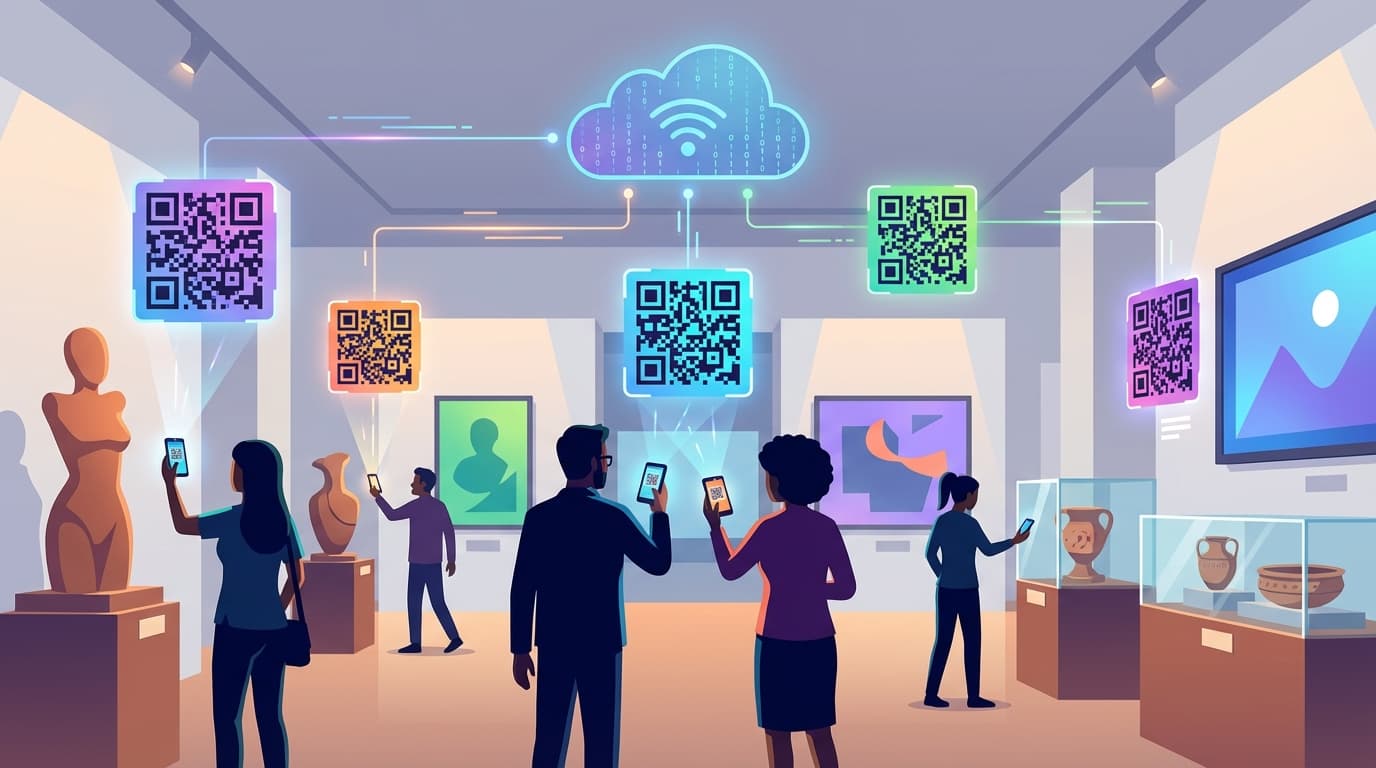
Picture this: you're standing in a museum lobby. There's a sleek little sign next to the entrance that says "Tap for Audio Guide." You hold your phone up. Nothing. You tap again, pressing harder this time. Still nothing. You shrug, pocket your phone, and walk in without the guide. You never realize your phone was four centimeters too far from the tag.
Read also: QR Codes vs. NFC vs. Barcodes: Which Technology Will Dominate in 2026?
This isn't about broken technology. It's about the gap between what NFC can do and what you actually use it for.
Your phone has had an NFC chip for years. You've probably used it exactly one way: tapping to pay for coffee. The rest of the time, that chip sits idle, capable of eliminating dozens of small daily frustrations you've trained yourself to tolerate.
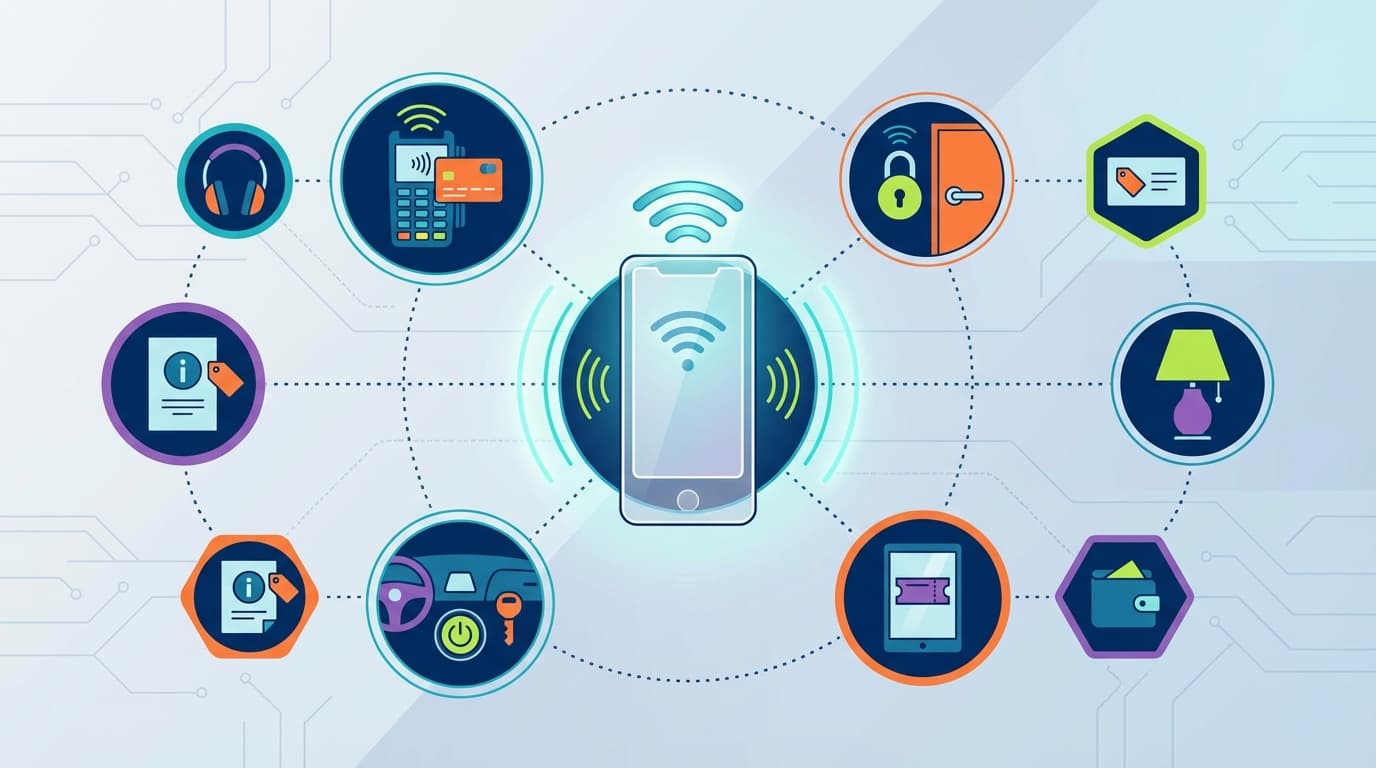
Most smartphone owners treat NFC like a single-purpose tool. It's not. It's a general-purpose bridge between physical objects and digital actions. The ten use cases below aren't theoretical: they're things you can set up this week, with hardware that costs less than a cup of coffee.
Your Phone Already Knows What NFC Is. You Just Call It Something Else
People hear "NFC" and their brain files it under "technical jargon I don't need." But they hear "tap to pay" and think "oh, I do that every day." Same technology. Same chip. Same radio protocol. The only difference is context.
This disconnect prevents discovery. Because NFC is branded as "Apple Pay" or "Google Pay" in the payment context, users never make the leap to "tap to share," "tap to connect," or "tap to trigger."
Think about your own behavior over the past month:
- Spell out a WiFi password letter by letter for a guest?
- Scroll through a Bluetooth device list looking for your speaker?
- Manually type someone's contact info from a business card?
- Open three different apps to trigger a smart home routine?
Every single one of those has a two-second NFC solution. But because none of them are labeled "payment," you never thought to look.
NFC isn't a feature. It's a "skip the annoying part" button for any interaction where the physical world needs to talk to the digital one.
The WiFi Password Problem: You're Still Texting Credentials Like It's Ancient History
Having guests over means performing one of the most tedious rituals in modern hospitality: sharing the WiFi password. You either dictate a long string while your guest squints at their keyboard, or you text it to them, which means your network credentials now live permanently in someone else's message history.
The alternative most people choose is worse: they keep a weak, memorable password specifically because sharing it is painful. Security sacrificed at the altar of convenience.
NFC solves this completely. Program a tag with your WiFi network name and password. Stick it on a coaster, inside a picture frame, on the entryway table. Guests tap their phone, and they're connected. No dictation, no texting, no photographs of your router's sticker.
This works on both iPhone (iOS 13 and later) and Android. The setup takes just a few minutes, once. After that, every guest interaction drops from a multi-minute password dance to a single tap.
If you have guests regularly, you recoup your setup investment quickly. And you get to keep your strong, random password without it being a social burden.
The Bluetooth Pairing Theater: Stop Scrolling Through Device Lists
Bluetooth pairing feels like it should have been fixed a decade ago.
The ritual goes like this: power on your speaker, open settings, navigate to Bluetooth, wait for the device list to populate, scroll past "JBL Flip 4," "Unknown Device," "Karen's AirPods," and seventeen other ghosts of connections past, tap your device, wait for pairing confirmation. Sometimes it fails. Repeat.
That's time spent every time, because most portable Bluetooth devices don't maintain persistent connections across power cycles. If you use a portable speaker daily, that ritual adds up quickly.
An NFC tag placed on or near the speaker eliminates the entire sequence. Tap your phone to the tag, and it triggers the Bluetooth connection directly. No settings menu, no scrolling, no failed pairing attempts.
The practical applications multiply quickly:
- Tag on your car dashboard for the car stereo
- Tag on the bathroom wall next to your shower speaker
- Tag stuck directly on a portable speaker
- Tag on a headphone charging case
Counterintuitive part: the cheaper your Bluetooth device, the more valuable the NFC tag becomes. Premium speakers and headphones tend to have better auto-reconnect features. Budget devices make you manually pair more often. An inexpensive NFC tag turns a frustrating budget device into something that connects as smoothly as a premium one.
Why Smart Home Routines Fail: How NFC Fixes the "Where's the App?" Problem
The smart home industry sold you a vision: walk into your home, say a magic phrase, and everything adjusts.
The reality is messier. You forget the exact command. You're not near a speaker. It's midnight and you don't want to wake your partner by talking to Alexa. So you reach for the app. By the time you find the right smart home app, open it, wait for it to connect to your hub, navigate to your scenes, and tap the right routine. You could have just walked to the light switch and flipped it manually. The app-based smart home adds steps to processes that used to take one step.
NFC tags are the physical buttons your smart home has been missing.
Bedside table tag: "Bedtime Mode"
- All lights off
- Thermostat drops to sleeping temperature
- Phone switches to Do Not Disturb
- Door locks engage
Entryway tag: "Leaving Home"
- All lights off
- Thermostat to eco mode
- Security cameras activate
The deeper insight isn't about convenience. It's about spatial mapping. NFC tags turn abstract digital "scenes" into physical locations. You're not remembering commands or navigating app hierarchies. You're tapping a specific place that corresponds to a specific action. Your bedside table means bedtime. Your front door means leaving. The physical space becomes the interface.
The Business Card You'll Actually Keep (And the One You Won't)
Paper business cards have a predictable lifecycle: receive at networking event, shove in pocket, discover crumpled in laundry, throw away. Even when they survive the journey home, manually typing someone's contact info into your phone almost never happens. The card sits on a desk for three weeks, then gets tossed.
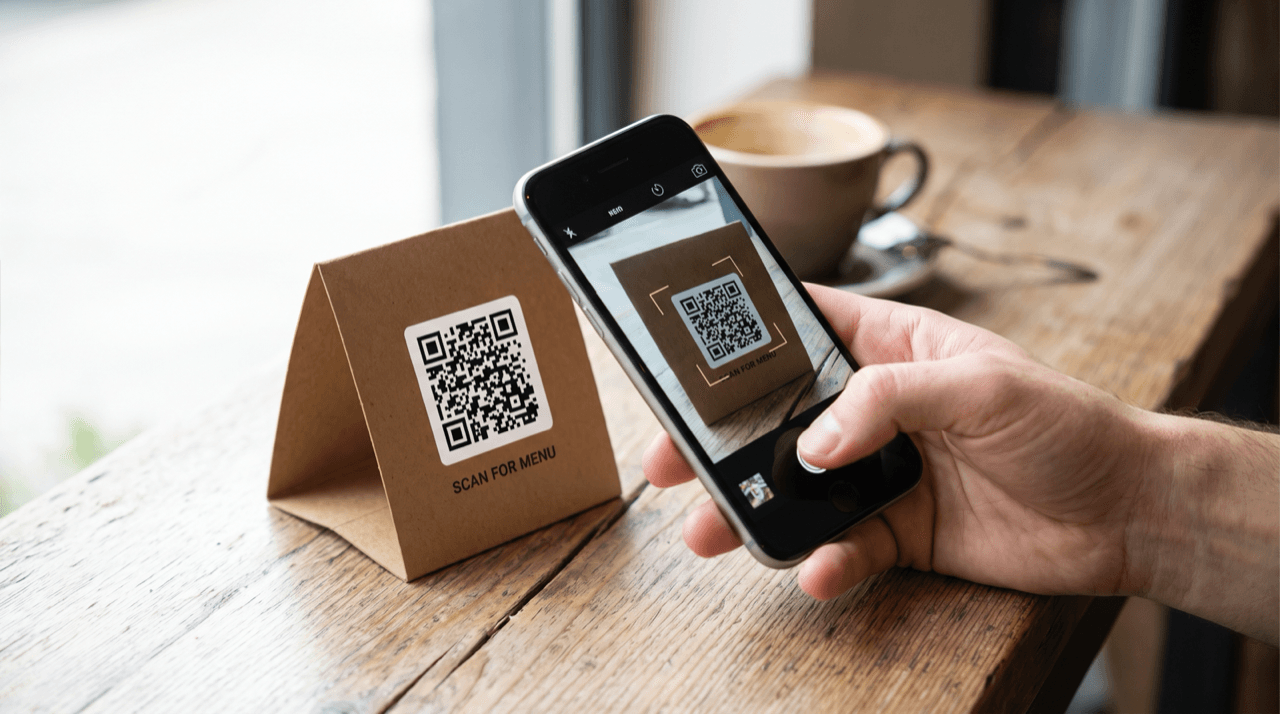
QR codes improved on this, but they introduced their own friction. You need to open the camera app, hold the phone at the right distance, ensure adequate lighting, and keep your hands steady. In a dark, crowded networking event, that's three problems too many.
NFC contact sharing strips away all of it. Tap your phone to an NFC-enabled card (or directly to another phone), and the contact information transfers instantly. Works in the dark. Works in a crowd. Works when you're holding a drink in your other hand.
NFC business cards are more expensive than traditional cards, which makes them expensive for mass distribution but perfect for high-value contacts. The medium itself becomes a signal: "I'm making it effortless for you to remember me."
The DIY version: stick an NFC tag on the back of your phone case, programmed with your vCard. Every phone-to-phone interaction becomes a potential contact exchange without carrying anything extra.
The Medication Reminder That Actually Works: Tied to a Place, Not a Time
App-based medication reminders have a fundamental design flaw: they fire at a scheduled time, regardless of where you are.
The notification pops up while you're driving, or in a meeting, or three rooms away from your medicine cabinet. You dismiss it, intending to take the medication "in a minute." That minute never arrives.
The problem isn't information. You know you need to take your medication. The problem is the trigger. You need the reminder at the exact moment you're in the physical location where you can act on it.
An NFC tag on your medicine cabinet solves the trigger problem. Tap it when you take your medication. The tap logs the action in a tracking app, confirms you've taken the dose, and creates a physical ritual that reinforces the habit.
This pattern extends to any routine anchored to a physical location:
- Tag on the garage wall: Tap to confirm you closed the garage door
- Tag on a plant pot: Tap to log watering
- Tag on the pet food container: Tap to log feeding times
The principle: NFC works best for routines tied to physical spaces, not time-based schedules. When the trigger and the action happen in the same location, follow-through rates climb dramatically.
Why You're Manually Typing the Same Information Over and Over: How to Stop
Think about how many times per month you type the same data into different forms. Shipping addresses. Loyalty program numbers. Emergency contact details. Hotel WiFi login pages. Each instance takes time. Across a month, it's a quiet, persistent tax on your time.
NFC enables two solutions:
Personal data tags: An NFC tag on your keychain or wallet, programmed with your contact details, shipping address, or loyalty numbers. Tap to auto-populate on compatible systems. This works well for personal use and is fully available now.
Authentication tokens: NFC tags functioning as physical second-factor authentication. Tap to verify your identity instead of waiting for an SMS code or opening an authenticator app. Faster than app-based 2FA, and immune to SIM-swapping attacks.
This is the least-developed consumer NFC use case on this list. The infrastructure at hotels, retailers, and service providers is still catching up. But understanding the capability now means you'll be ready to adopt it as these systems roll out.
One privacy advantage: unlike QR codes, which can be photographed and scanned from a distance, NFC requires physical proximity. You control when data transfers happen. Nobody is scanning your NFC tag from across the room.
The Myth of the "Tech-Savvy" User: NFC Adoption Has Nothing to Do with Technical Skill
There's a persistent assumption that NFC tags are for hobbyists and tinkerers (the kind of people who build their own home servers and flash custom firmware on their routers).
This is wrong, and the misconception itself is one of the biggest barriers to adoption.
NFC adoption doesn't correlate with technical ability. It correlates with problem awareness. The people who actually use NFC tags aren't necessarily technical. They're people who hit a specific frustration threshold:
- The parent who dictated the WiFi password one too many times during a birthday party
- The person who fought with Bluetooth pairing every morning before a workout
- The smart home owner who realized they were spending more time in apps than they saved with automation
- The professional who watched one too many business cards end up in a trash can
The real barrier isn't complexity. Programming an NFC tag takes just a few minutes with free apps. The barrier is discovery. Most people simply don't know these use cases exist. QR codes had a forcing function: pandemic-era restaurant menus and contact tracing pushed universal adoption practically overnight. NFC has had no equivalent catalyst.
You don't need to understand radio frequency protocols. You need to recognize a recurring annoyance in your life that takes time every time it happens. That's your activation trigger.
What You Actually Need to Get Started (And What You Don't)
Hardware:
- Your current phone. If it was manufactured recently, it almost certainly has NFC.
- NFC tags. NTAG215 format is the sweet spot: broad compatibility and enough memory for most use cases. A pack of several tags is inexpensive.
- Nothing else.
Software:
- iPhone: The Shortcuts app, which comes pre-installed
- Android: NFC Tools (free) or Tasker (paid, for advanced automation)
Your first project should be WiFi sharing. It has the lowest setup complexity, the most immediately obvious value, and repeatable benefit every time someone visits.
What you do not need:
- A special NFC reader device (your phone is the reader)
- Any subscription service
- Technical knowledge beyond following a simple tutorial
- Expensive "smart" NFC tags (basic tags handle the vast majority of use cases)
Time investment: a short time for your first tag. Less time for every tag after that.
The Two Mistakes That Make People Abandon NFC After One Try
Mistake #1: Starting with a complex use case.
Bad first project: a multi-conditional smart home routine that chains eight different triggers, requires three apps to configure, and depends on your home hub being in exactly the right state. When it fails (and complex automations fail often during setup), you conclude that NFC is unreliable.
Good first project: a single-action tag. WiFi sharing. Bluetooth pairing. Opening a specific URL. One tag, one action, instant feedback. When it works on the first tap, your brain files NFC under "useful" instead of "finicky."
Mistake #2: Placing tags on metal surfaces without anti-metal tags.
NFC uses electromagnetic induction. Metal surfaces interfere with the signal. Stick a standard NFC tag on a metal door frame, a refrigerator, or inside a metal phone case, and it will fail to read. Users don't diagnose it that way. They just think "NFC doesn't work" and never try again.
The fix:
- Start with non-metal surfaces (wood, plastic, drywall)
- Test tag placement before permanently mounting with adhesive
- Use anti-metal NFC tags when metal placement is unavoidable
- Position tags in easy-to-reach, unobstructed locations at natural tap height
The success pattern is remarkably consistent: one working tag leads to several more within a month. The first successful tap marks the inflection point.
Your Next 15 Minutes
Order a pack of NFC tags (NTAG215 format), available from any major online retailer.
While waiting for delivery, identify the most annoying recurring manual task in your daily routine. WiFi passwords, Bluetooth pairing, smart home scenes: pick the one that irritates you most frequently.
When the tags arrive, program one tag for that single task. One tag. One action. Use it for a week.
If it saves you time (and it will), program the others.
The test: if you're still using your first NFC tag 30 days from now, you'll have many more tags within six months. That's the pattern that plays out over and over once someone crosses the threshold from "I've heard of NFC" to "I use NFC."
And if you're not using it after 30 days? You chose the wrong first use case. Pick something more annoying and try again.

Ready to track your QR codes?
Create trackable QR codes with powerful analytics. See who scans, when, and where. All in real-time. Get started for free today.