

How QR Menus Are Evolving Beyond Ordering in 2025
Remember when scanning a QR code at a restaurant just pulled up a clunky PDF of the same menu you could have held in your hands? That era is over. The static PDF menu (that digitized snapshot of a paper original) has become effectively obsolete. What's replaced it is far more ambitious: a new generation of cloud-based, interactive QR menu platforms that are reshaping how restaurants engage with guests, run their operations, and grow revenue. As of 2026, QR menus aren't just about reading a list of dishes on your phone. They've become full-service ecosystems handling everything from waitlist management and AI-powered recommendations to gamified loyalty programs and real-time inventory syncing.
The implications stretch across restaurant operations, hospitality brands, and any business that bridges physical and digital customer interactions. Here's a detailed look at where QR menus stand today: what's working, what's sparking debate, and what the data actually tells us.
QR Code Adoption Has Reached Critical Mass
QR code scanning in the United States is projected to surpass 100 million users by 2026, according to data from ScanQueue and Statista. This isn't niche behavior anymore. It's mainstream. And in the restaurant sector, the appetite for smartphone-driven experiences runs even deeper: 75% of quick-service restaurant (QSR) customers explicitly want to use their smartphones to place orders, according to ScanQueue.
Read also: 7 QR Code Lead Generation Strategies for 2026
The numbers keep stacking up. A 2024 Hospitality Australia Survey found that 72% of diners prefer venues with QR ordering, pointing to convenience, speed, and hygiene as their top reasons. The financial case is just as strong. According to SimpleQR, restaurants using digital menus report an average check increase of 23% and can eliminate printing costs entirely.
The picture these numbers paint is unmistakable: the question is no longer whether restaurants should adopt QR menus. It's how sophisticated those menus need to be to keep pace with rising consumer expectations.
From "Scan to Read" to "Scan to Interact": The Platform Shift
The defining shift in QR menu technology is the leap from static document delivery to dynamic, cloud-based interactive platforms built on HTML5. A static PDF menu is a one-way communication tool: it shows the guest what's available and stops there. Modern QR menu platforms work both ways, integrating directly with Point of Sale (POS) and Kitchen Display Systems (KDS).
Read also: Claude Code for Beginners: Setup, Tips & First Project
Real-Time Inventory Syncing
One of the most operationally meaningful advances is real-time menu syncing. Platforms like Menumiz and Menumix allow instant updates: when an item sells out in the kitchen, it vanishes from the QR menu immediately. No more order errors. No more customer frustration. And no more of that awkward moment when a server walks back to a table to explain that a dish isn't available.
As Modern Restaurant Management noted in January 2026: "The biggest operational wins in 2026 will come from connecting touchpoints... When everything runs through one system, a menu update happens once and pushes everywhere instantly."
Multimedia-Rich Experiences
PDFs can't do this: high-definition video, ingredient sourcing stories, and "chef's notes" pop-ups woven directly into the menu. A guest scanning a QR code at a farm-to-table restaurant might watch a short video of the farm where their produce was sourced, or tap into a pop-up explaining the chef's inspiration behind a seasonal dish. This multimedia richness turns the menu from a transactional checklist into a storytelling medium.
The "Single Scan" Ecosystem
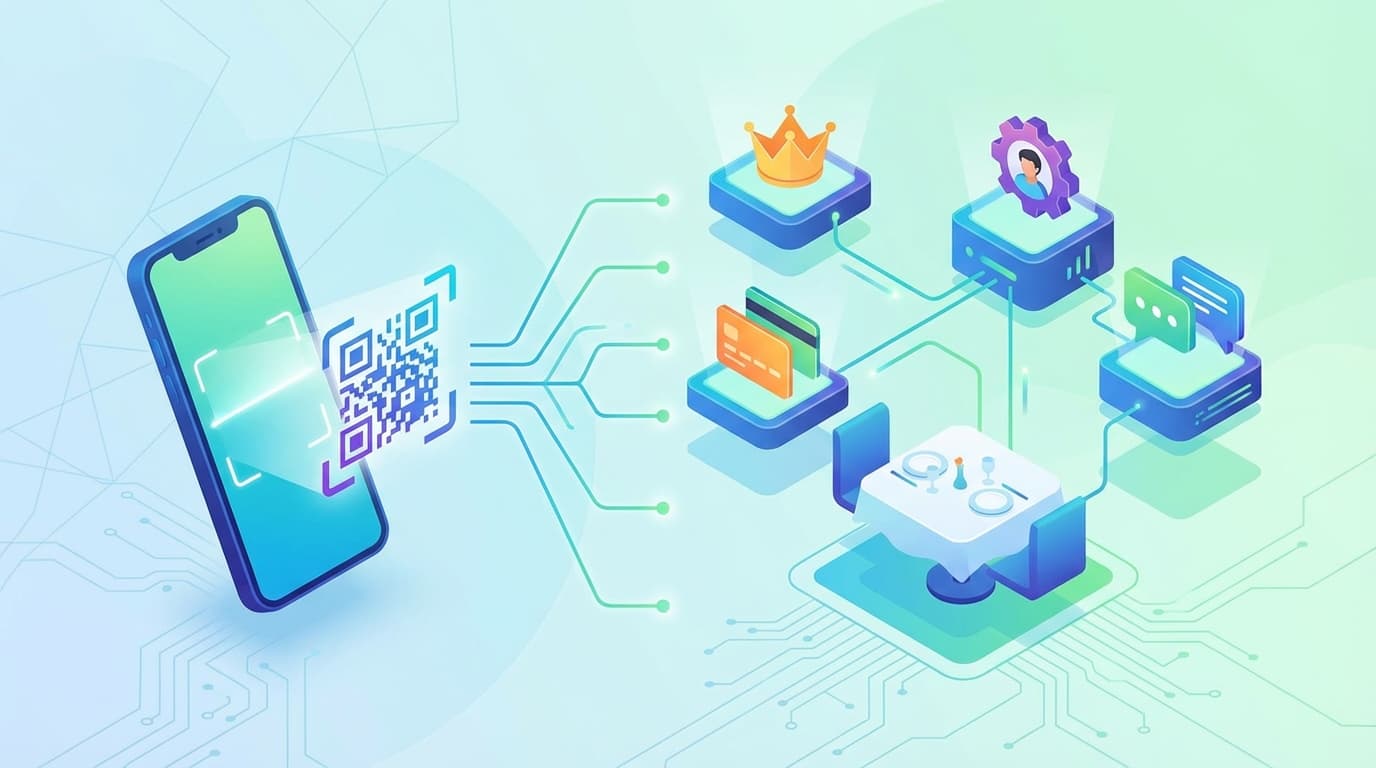
The "Single Scan" concept ranks among the most significant QR menu trends heading into 2026, according to Modern Restaurant Management. The idea boils down to consolidation: a single QR code acts as the "front door" for the entire guest experience. One scan handles joining a waitlist, browsing the menu, placing an order, paying the bill, splitting the check, and enrolling in or redeeming loyalty points. All without downloading an app or creating an account.
Think about what this replaces. The old model was disjointed: one app to order, another to pay, a physical punch card for loyalty. The Single Scan approach collapses all of those touchpoints into a single, seamless interaction.
AI Personalization: The Menu as an Active Sales Agent
Artificial Intelligence is turning the QR menu from a passive list of options into something closer to an attentive sales agent. When a guest's order history is linked via phone number or loyalty profile, AI algorithms can analyze past behavior and tailor the menu experience in real time.
Read also: QR Code Treasure Hunts Revolutionizing Games in 2025
Hyper-Personalization in Practice
Picture a returning guest who always orders a ribeye steak. An AI-powered QR menu might greet them with "Order your usual?" or suggest a specific wine pairing based on their previous selections. This kind of personalization used to require an attentive human server who remembered regulars by name and preference. Now it scales across every table, every shift, every location.
Visual Upselling at the Point of Decision
Data indicates that high-quality photos can increase order value by 40%, according to research cited in the industry analysis. Smart menus put this to work by automatically highlighting high-margin add-ons at the exact moment a guest is making a decision. A prompt like "Add truffle fries for $2" popping up right as someone adds a burger to their cart hits harder than a static line item buried at the bottom of a PDF.
This kind of contextual upselling (the right offer at the right moment) is a core reason digital menus drive that 23% average check increase reported by SimpleQR.
Language and Accessibility
In response to the European Accessibility Act (EAA) and updated ADA standards, QR menus in 2025 and 2026 are increasingly built with accessibility as a core feature rather than a bolt-on. Modern platforms offer automatic translation into 13 or more languages, screen reader compatibility, and high-contrast display modes for visually impaired guests. For restaurants in tourist-heavy areas or diverse urban markets, this goes beyond compliance. It's a competitive edge.
Gamification: Turning Menus into Engagement Engines
Gamification is gaining traction as a strategy for restaurants looking to combat "digital fatigue" and boost both dwell time and check size. Instead of simply presenting a menu and a checkout button, operators are embedding game mechanics into the QR experience to keep guests engaged and pull them back for repeat visits.
Read also: Who Invented the QR Code? The Japanese Engineer Who Changed How We Share Information
How It Works
Platforms like Playzo and Trophy are enabling a range of gamification features for restaurants, including:
- Spin-to-Win: A digital wheel appears at checkout, giving guests a chance to win a free dessert or a discount on their next visit. It creates a small burst of excitement at the end of the meal and gives people a reason to come back.
- Trivia and Quizzes: QR codes on table tents link to trivia games where high scores unlock secret menu items. Wait time becomes engagement time, and guests interact with the brand beyond the transaction itself.
- Streak Rewards: Systems that track consecutive visits or orders, unlocking "VIP" status badges or exclusive perks for loyal customers.
The psychology is straightforward: "bite-sized rewards" deliver instant gratification, keeping customers engaged without overwhelming them. According to Playzo, these small, frequent reward moments drive loyalty participation more effectively than traditional points-based systems that demand significant accumulation before any payoff.
For operators, gamification also generates valuable data. Every spin, every trivia answer, every streak provides insight into customer preferences and visit frequency. Data that feeds directly back into the AI personalization engine described above.
The Dynamic Pricing Dilemma: Opportunity or Minefield?
Dynamic pricing (adjusting menu prices based on demand, time of day, or seasonality) is the most contentious trend in the QR menu space as of 2026. The technology to implement it is readily available through digital menu platforms. The consumer response, however, is a serious risk factor.
The Operator Perspective
With inflation continuing to squeeze margins, operators are understandably drawn to tools that can optimize revenue. According to a February 2026 survey by Popmenu, 31% of operators are considering variable pricing in 2026, up from 22% in 2025. The appeal is obvious: charge more during peak dinner hours when demand is high, offer lower prices during slow Tuesday afternoons to drive traffic.
The Consumer Backlash
Here's the problem: consumers overwhelmingly reject this approach. A HungerRush survey found that 66% of consumers view dynamic pricing negatively, with 4 in 5 stating they would stop visiting a restaurant that used "surge pricing." Jon Picoult of Watermark Consulting captured the sentiment well: "Consumers really appreciate consistency and transparency... when they encounter something that violates those tenets [like dynamic pricing], it leaves them uncomfortable."
The Strategic Pivot
The emerging consensus among savvy operators is to reframe dynamic pricing entirely. Rather than "surge" pricing that raises costs during peak times, the smarter play uses "happy hour" logic: lowering prices during slow periods to attract traffic without ever making a customer feel punished for dining at a popular time. Some operators are also experimenting with "decoy pricing," strategically positioning menu items to steer customers toward high-margin options without triggering the negative associations of variable pricing.
This is where the analytics capabilities of a platform like QRlytics become critical. Understanding when customers scan, what they view, and how long they spend on specific menu sections provides the data foundation for any pricing strategy, whether dynamic or traditional.
Risks and Limitations: What Could Go Wrong
As QR menus grow more sophisticated, the potential downsides grow right alongside them. The evolution isn't without real risks.
Privacy Concerns
QR menus are quietly becoming data collection tools: tracking view times, scroll depth, order history, and location. Customers are increasingly wary of this kind of surveillance. "Guest Analytics" features that give operators granular behavioral data must balance business insight with privacy compliance, especially in markets governed by GDPR or similar regulations. Transparency about what data gets collected and how it's used is essential to maintaining trust.
Security Vulnerabilities: The "Quishing" Threat
"Quishing" (QR code phishing) remains a real and growing threat. Malicious actors can paste fake QR code stickers over legitimate ones in restaurants, redirecting unsuspecting guests to fraudulent payment pages or data-harvesting sites. Operators must actively manage this risk through regular physical inspections of QR code placements and the use of dynamic QR codes that can be monitored and updated remotely. This is a core capability of analytics platforms like QRlytics.
The Human Touch Factor
While 18.2% of diners explicitly prefer phone ordering over talking to staff, a significant portion of the dining population still values human interaction as a core part of eating out. Over-automation risks alienating older demographics or guests seeking a traditional, hospitality-driven service model. The most successful implementations treat QR menus as a complement to human service, not a replacement for it.
What This Means for Campaign and QR Code Management
The sophistication of modern QR menu ecosystems demands equally sophisticated analytics and management infrastructure. A restaurant deploying QR codes across multiple locations (each tied to dynamic menus, loyalty programs, gamification features, and potentially variable pricing strategies) needs centralized visibility into how those codes are performing.
Key questions operators need to answer include:
- Scan volume by location and time: Which locations see the highest engagement? When are peak scanning times, and do they line up with peak dining times?
- Device and demographic patterns: What devices are guests using? Are there accessibility gaps that need attention?
- Campaign attribution: If a QR code appears on a table tent, a receipt, and a social media post, which placement drives the most engagement?
- Security monitoring: Are scan patterns consistent, or do anomalies suggest potential quishing attempts?
This is precisely the kind of granular, real-time insight that a dedicated QR analytics platform provides. Without it, operators are flying blind: deploying increasingly complex QR-driven experiences without the data to optimize or protect them.
The Road Ahead: What to Expect in Late 2026 and Beyond
The trajectory is clear. QR menus are evolving from simple digital documents into comprehensive guest experience platforms. The key trends to watch:
- Deeper AI integration that makes every menu interaction feel personalized and contextually relevant.
- Expanded gamification that turns dining into an interactive, loyalty-building experience rather than a purely transactional one.
- Cautious experimentation with pricing strategies that leverage the flexibility of digital menus while respecting consumer expectations for transparency and consistency.
- Heightened focus on security and privacy as QR codes become more central to the payment and data collection ecosystem.
- Continued consolidation toward the "Single Scan" model, where one QR code serves as the gateway to the entire guest journey.
For restaurant operators, the takeaway is simple: the static PDF menu is a relic. The QR code on your table is no longer just a link to a menu. It's the operating system for your guest experience. And like any operating system, it needs monitoring, measurement, and continuous optimization.
The restaurants that thrive in this environment will be the ones that treat their QR infrastructure not as a pandemic-era workaround, but as a strategic asset deserving of the same analytical rigor they apply to food costs, labor scheduling, and marketing spend.

Ready to track your QR codes?
Create trackable QR codes with powerful analytics. See who scans, when, and where. All in real-time. Get started for free today.

